When most people picture Florida’s iconic wildlife, they think of alligators, manatees, roseate spoonbills, or maybe the playful dolphins of the 10,000 Islands region. Rarely does anyone say, “I hope we see a vulture today.” Yet these remarkable birds are among the most essential — and misunderstood — creatures in Florida’s natural ecosystems.
At Wild Lime Adventures, we believe every animal has a story worth telling. And the vultures of South Florida? They’re some of the most surprising.
Meet Florida’s Two Common VulturesTags
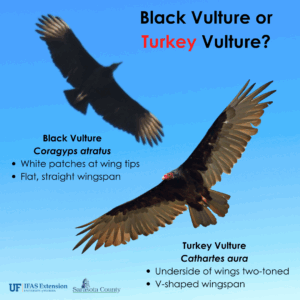
Turkey Vulture (Cathartes aura)
Graceful in flight, with a wingspan stretching up to six feet, the turkey vulture is a master of soaring. You can spot them riding thermals high above the Everglades. They use their extraordinary sense of smell to locate carrion. Their sense of smell is one of the strongest olfactory abilities in the bird world!
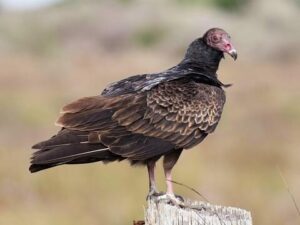
Black Vulture (Coragyps atratus)
Sleek, social, and more compact, black vultures travel in tight family groups and rely more on eyesight than smell. They’re strong, agile fliers and often more curious around people. Their sense of smell is not as keen as the Turkey Vulture’s is so they are known to follow the Turkey Vuture to find food.
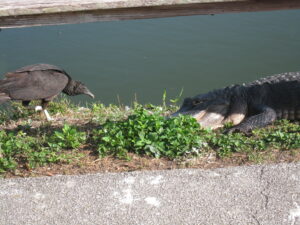
Both species help keep Florida clean and healthy — a natural sanitation crew working 24/7.
Why Vultures Matter More Than You Think
1. Nature’s Cleanup Team
Vultures consume animals that have died from disease, toxins, or natural causes. Without them, carcasses would linger, spreading pathogens and attracting pests. Their powerful digestive systems neutralize dangerous bacteria like anthrax, rabies, and botulism. Few animals on Earth can do this.
2. Pest Population Control
By removing decaying animals, vultures help reduce populations of flies, rats, and other scavengers that flourish around carcasses.
3. Indicators of Environmental Health
Vultures are highly sensitive to toxins. Healthy vulture populations often signal healthy ecosystems — and in a place as delicate as the Everglades, every indicator counts.
Vulture Behavior: A Mix of Spooky and Spectacular
Soaring Masters
Ever seen a huge bird circling effortlessly for minutes without a single wingbeat? That’s a vulture. They ride invisible rivers of warm air, conserving energy as they crisscross the sky in search of food.
Smart and Social
Black vultures live in tight-knit communities, often returning to the same roosts for generations. They even show cooperative behaviors — like group defense and shared parenting.
A Little Gross, A Lot Brilliant
Yes, vultures sometimes practice “urohidrosis,” which means they cool themselves by… well… pooping on their own legs. Gross? Maybe. Ingenious? Absolutely. The evaporation cools them, and the uric acid disinfects their feet after walking on carcasses.
Human Conflict: When Curiosity Becomes a Nuisance
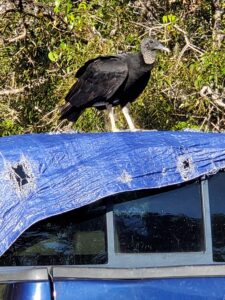
Vultures are generally harmless, but in some Florida neighborhoods they’ve developed a bad habit: pecking at sunroofs, wiper blades, or boat upholstery. Black vultures in particular are bold, intelligent, and love to investigate new textures.
Wild Lime tip: If you’re in a parking area or marina known for vulture activity, covering vehicles with tarps or using deterrents like reflective ribbons can help.
Where to Spot Them on Tour
You’ll often see these majestic birds:
-
Near tree islands and hammocks in Everglades National Park
-
Above Shark Valley’s observation tower
-
Roosting along Big Cypress waterways
-
Circling high above Loop Road
-
Around coastal areas with rich wildlife activity
Their silhouettes are unmistakable and, once you learn their patterns, surprisingly elegant.
A Creature Worth Appreciating
Vultures may not be the glamorous stars of South Florida’s fauna, but they are absolutely vital. They embody the Everglades’ core truth: every species has a role, and even the “ugly” ones help keep the wilderness thriving.
So next time you join us on an Everglades or Big Cypress adventure, look up — you just might see a vulture doing the quiet, essential work that keeps Florida wild alive.