
For many visitors, spotting an alligator is a bucket-list moment. Seeing a crocodile? Even rarer. But seeing both — in their natural habitat, on the same day — is something truly extraordinary.
And there’s only one place in the entire world where that’s possible:
South Florida.
The Everglades and coastal estuaries of South Florida form the planet’s only overlapping habitat for the American Alligator and the American Crocodile, two ancient reptiles often confused but incredibly different.
Here’s your guide to telling these amazing creatures apart — and appreciating the ecosystems that make their coexistence possible.
Joining Wild Lime Adventures on either tour #5 or tour #7 or #2 is your best opportunity to see BOTH in one day.
Alligator or Crocodile? The Big Differences
1. The Snout Shape
This is the easiest way to tell them apart.
-
Alligators have a broad, U-shaped snout. Think “U for ‘USA’” — a perfect way to remember their classic American presence.
-
Crocodiles have a narrower, V-shaped or more pointed snout.
The shape reflects their diets:
Alligators crush turtles and tougher prey, while crocodiles often pursue fish in brackish, salty water where they have to fit their snout into mangrove tree roots.
Here’s a helpful drawing: (taken from https://brightside.me/articles/how-crocodiles-differ-from-alligators-812200/)
2. Teeth: Who’s Smiling?
Crocodiles show more teeth when their mouth is closed — especially a single lower tooth that sticks out like a snaggletooth.
Alligators hide their lower teeth behind their upper jaw, giving them a more subtle grin.
3. Habitat: Freshwater vs. Saltwater
This difference is what makes South Florida’s overlap so special.
-
Alligators prefer freshwater: ponds, sloughs, marshes, lakes, and the slow-moving rivers of the Everglades and Big Cypress.
-
Crocodiles need salt or brackish water — think coastal mangroves, estuaries, and the edges of Biscayne Bay and Florida Bay.
Only in South Florida do these worlds blend enough for both species to thrive side by side
4. Color: Dark vs. Light
-
Alligators are usually darker — charcoal gray or almost black.
-
Crocodiles appear lighter, often an olive green or even a pale gray.
5. Temperament
Both are wild reptiles and deserve plenty of space, but generally:
-
Alligators tend to be more shy and avoid confrontation.
-
Crocodiles can be more territorial, especially around nesting sites.
Still, both species are vital to Florida’s ecosystems — and safe to view from respectful distances, especially with experienced naturalist guides.
QUIZ yourself with these photos taken on our tours:
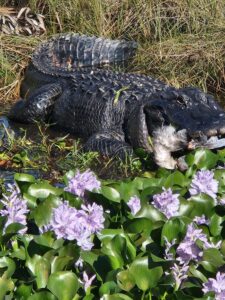
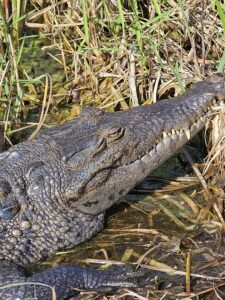
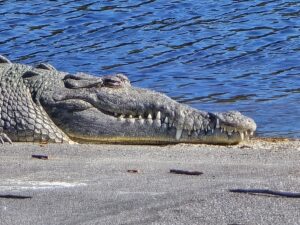
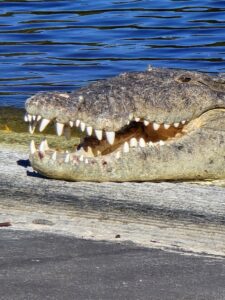
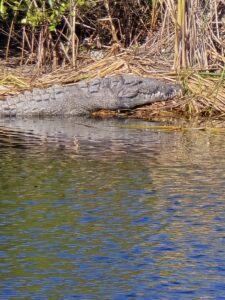
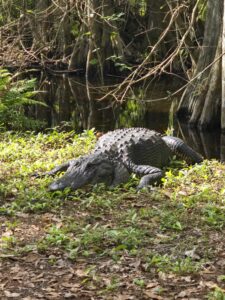
Both species help keep Florida clean and healthy — a natural sanitation crew working 24/7.
Why South Florida Is the Only Place on Earth Where They Overlap
The Magic Mix: Freshwater Meets Saltwater
Everglades National Park and the surrounding coastal systems form one of the most unique hydrological landscapes in the world. Rivers of freshwater flow south and mix with the salty Gulf and Atlantic waters.
This creates perfect zones of:
-
pure freshwater
-
pure saltwater
-
and wide stretches of brackish habitat in between
Crocodiles thrive in the salty margins.
Alligators dominate the inland marshes.
But in this rare ecological overlap — especially near Everglades National Park’s southern tip, the Florida Keys, and Biscayne Bay — the two species coexist.
A Conservation Story
Fifty years ago, American crocodiles were nearly gone from the United States. Today, thanks to conservation efforts, their numbers have rebounded, and South Florida remains their stronghold.
Their comeback makes this overlap even more special — a living example of how protecting the landscape protects the species that depend on it.
Where Can You See Both?
On a Wild Lime Adventures tour, guests sometimes spot both species on the same day — a thrilling and globally unique experience.
Seeing one is exciting.
Seeing both is something you’ll talk about for the rest of your life.
Two Ancient Reptiles, One Extraordinary Place
Alligators and crocodiles are survivors — species that have outlived dinosaurs, ice ages, and countless changes to the planet. The fact that they meet here, in South Florida, is one of the natural world’s great coincidences and one of the Everglades’ quiet wonders.
Next time you’re exploring South Florida, take a moment to appreciate this rare crossroads of wildlife.
And if your goal is to see both?
You’re already in the only place on Earth where that dream can come true.
Join us on either Tour #5, or #7 (best chances) or #2 and we can make it happen!
We are fully permitted with both Evergaldes National Park and Big Cypress National Preserve